Seasonal & Festive Thanksgiving Herb Stuffed Turkey
Highlighted under: Seasonal Flavors
Every Thanksgiving, I look forward to bringing the family together around a beautifully roasted turkey. The aroma of the herbs fills the kitchen and sets the mood for the holiday feast. This recipe for Herb Stuffed Turkey combines my favorite seasonal flavors, and I've learned a few tricks along the way to ensure the turkey is moist and flavorful. From the perfect herb mix to the right cooking time, each step is vital. I'm excited to share this delicious recipe that has become a centerpiece of our Thanksgiving celebration.
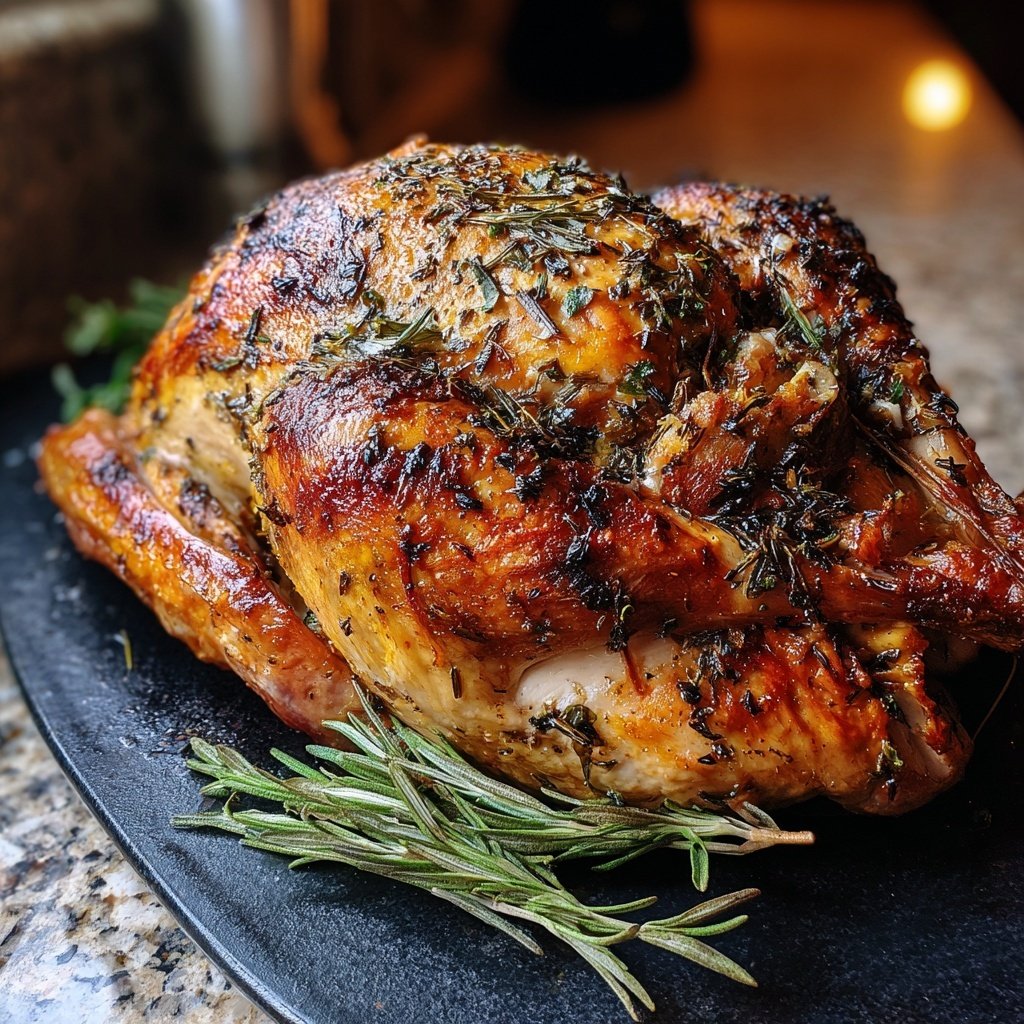
Reflecting on my Thanksgiving preparations, I often remember that one year when I experimented with different herbs in the stuffing. The result was a game changer! By incorporating fresh sage, thyme, and rosemary, I found a flavor profile that perfectly complements the turkey. It’s amazing how simple ingredients can elevate a dish to something truly memorable.
Another tip I discovered is to always roast the turkey breast-side down for the first hour. This allows the juices to flow into the meat, resulting in an incredibly moist turkey. Trust me, once you try this method, you'll never roast it any other way!
Why You'll Love This Recipe
- Aromatic herb blend that elevates the flavor of the turkey
- Moist, tender meat thanks to the unique cooking method
- A centerpiece that will impress your guests at any holiday gathering
Herb Choices and Their Benefits
The herbs used in this recipe contribute significantly to the turkey's flavor profile. Fresh sage, thyme, and rosemary are all traditional herbs for Thanksgiving, each bringing a unique aroma and taste. Sage adds an earthy quality, while thyme complements the richness of the turkey, and rosemary introduces a hint of pine. Choosing fresh herbs over dried ones can take your stuffing to the next level, enhancing the overall experience with vibrant flavors and scents. If fresh herbs aren't available, consider using a suitable ratio of dried herbs, but keep in mind that dried herbs are more potent, so adjust accordingly.
Incorporating these herbs into the stuffing not only flavors the turkey from the inside but also infuses the meat during cooking. This technique is crucial; properly mixed herbs prevent any single flavor from overpowering the others, allowing for a balanced taste with every bite. To achieve a harmonious blend, you can also experiment with other herbs that might suit your palate, such as parsley or tarragon, keeping in mind their flavor intensity and compatibility.
Tips for Perfect Roasting
Roasting the turkey breast-side down for the first hour is a game-changer. This technique allows the juices to flow into the breast meat, resulting in a moist and tender texture. After the initial hour, flipping the turkey can create a beautifully browned skin on the breast side. Make sure to use heat-resistant gloves to safely flip the turkey. Using a roasting pan with a rack helps circulate air around the turkey, promoting even cooking. Always keep an eye on your turkey's internal temperature—investing in a good meat thermometer can prevent undercooked or overcooked results.
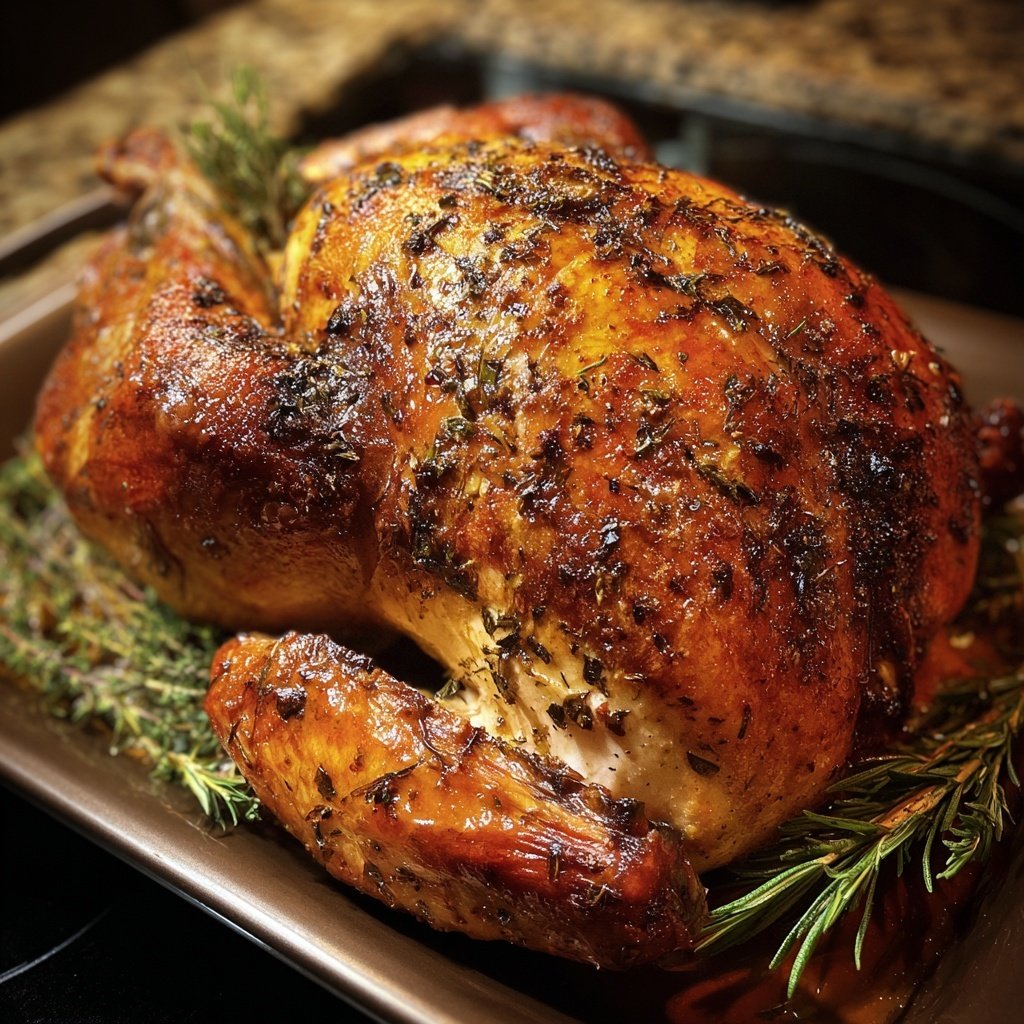
Basting the turkey with the remaining butter and broth every 30 minutes not only enhances the flavor but also aids in achieving that coveted golden-brown exterior. For an extra layer of complexity, consider adding apple cider or white wine to the basting liquid. These ingredients complement the herbs wonderfully, making every basting session a chance to enhance the turkey's overall flavor. Visual cues such as a rich golden color and crispy skin are excellent indicators that your turkey is cooking perfectly.
Ingredients
For the Turkey
- 1 (14-16 pound) whole turkey, thawed
- 1 cup unsalted butter, softened
- 2 cups fresh bread crumbs
- 1 cup onion, diced
- 1 cup celery, diced
- 2 tablespoons fresh sage, chopped
- 2 tablespoons fresh thyme, chopped
- 2 tablespoons fresh rosemary, chopped
- Salt and pepper to taste
- 4 cups low-sodium chicken broth
Instructions
Cooking Instructions
Prepare the Turkey
Preheat your oven to 325°F (163°C). Rinse the turkey inside and out under cold water, then pat dry with paper towels. Carefully loosen the skin over the turkey breast and rub half of the softened butter underneath the skin. Season the turkey generously with salt and pepper.
Make the Stuffing
In a large skillet, melt 2 tablespoons of butter over medium heat. Add the diced onion and celery, cooking until softened. Stir in the fresh herbs and breadcrumbs; mix well. Add enough chicken broth to moisten the mixture but not make it soggy.
Stuff the Turkey
Spoon the stuffing into the cavity of the turkey. Do not overpack; it will expand while cooking. Tie the legs together with kitchen twine and tuck the wings under the bird.
Roast the Turkey
Place the turkey breast-side down in a roasting pan. Roast for one hour before flipping it over to breast-side up. Continue roasting, basting every 30 minutes with the remaining butter and broth, until the internal temperature reaches 165°F (74°C).
Rest and Serve
Once cooked, let the turkey rest for at least 20 minutes before carving. This helps retain the juices. Serve with your favorite sides and enjoy!
Notes
Pro Tips
- For a deeper flavor, consider brining the turkey the night before. It enhances the juiciness and infuses additional flavor throughout the meat.
Make-Ahead Strategies
This herb stuffed turkey is perfect for planning in advance, which can ease your Thanksgiving preparations. You can prepare the stuffing a day ahead and store it in the fridge to allow the flavors to meld. Just be sure to cool the stuffing to room temperature before refrigerating to prevent bacteria growth. Another option is to season the turkey with salt and herbs a few hours in advance, allowing the flavors to penetrate the meat more deeply. Remember, however, that stuffed turkeys should be cooked immediately after stuffing to avoid any food safety issues.
If you're looking to save some time on the big day, you can also consider roasting the turkey the night before. Once cooked, let it cool and then refrigerate. Reheat slices in the oven just before serving, ensuring they are warm and juicy by covering them with foil to retain moisture. This approach allows you to enjoy your time with family instead of worrying about the turkey cooking while you prepare other dishes.
Serving Suggestions
Serving the herb stuffed turkey with complementary side dishes enhances the overall Thanksgiving experience. Classic pairings like cranberry sauce, roasted vegetables, and fluffy mashed potatoes create a well-rounded meal. A rich gravy made from the turkey drippings can also tie the flavors together beautifully. If you prefer a lighter touch, consider a refreshing arugula salad with a lemon vinaigrette to balance the richness of the turkey.
When it comes to presentation, carving the turkey at the table can add an element of drama to your feast. Use a sharp carving knife, and don’t forget to slice against the grain for tender meat. I like to arrange the slices on a platter, garnished with extra herbs and seasonal fruits like pomegranate or oranges for a festive touch. Such garnishes not only enhance visual appeal but also add a pop of flavor that guests will love.
Questions About Recipes
→ Can I use frozen herbs instead of fresh?
While fresh herbs provide the best flavor, you can use frozen herbs if necessary. Just make sure to use them in a slightly larger quantity since they lose some potency when frozen.
→ What can I substitute for breadcrumbs?
You can use crushed crackers, cooked rice, or quinoa as alternatives to breadcrumbs. Each will give a different texture and flavor but works well in a stuffing.
→ How do I know when the turkey is done?
The safest way to check is to use a meat thermometer. Insert it into the inner thigh; if it reads 165°F (74°C), the turkey is fully cooked.
→ Can I prepare the stuffing ahead of time?
Yes, you can prepare the stuffing a day in advance. Just keep it refrigerated, and stuff the turkey right before cooking.
Seasonal & Festive Thanksgiving Herb Stuffed Turkey
Created by: Phoebe Turner
Recipe Type: Seasonal Flavors
Skill Level: Intermediate
Final Quantity: 12 servings
What You'll Need
For the Turkey
- 1 (14-16 pound) whole turkey, thawed
- 1 cup unsalted butter, softened
- 2 cups fresh bread crumbs
- 1 cup onion, diced
- 1 cup celery, diced
- 2 tablespoons fresh sage, chopped
- 2 tablespoons fresh thyme, chopped
- 2 tablespoons fresh rosemary, chopped
- Salt and pepper to taste
- 4 cups low-sodium chicken broth
How-To Steps
Preheat your oven to 325°F (163°C). Rinse the turkey inside and out under cold water, then pat dry with paper towels. Carefully loosen the skin over the turkey breast and rub half of the softened butter underneath the skin. Season the turkey generously with salt and pepper.
In a large skillet, melt 2 tablespoons of butter over medium heat. Add the diced onion and celery, cooking until softened. Stir in the fresh herbs and breadcrumbs; mix well. Add enough chicken broth to moisten the mixture but not make it soggy.
Spoon the stuffing into the cavity of the turkey. Do not overpack; it will expand while cooking. Tie the legs together with kitchen twine and tuck the wings under the bird.
Place the turkey breast-side down in a roasting pan. Roast for one hour before flipping it over to breast-side up. Continue roasting, basting every 30 minutes with the remaining butter and broth, until the internal temperature reaches 165°F (74°C).
Once cooked, let the turkey rest for at least 20 minutes before carving. This helps retain the juices. Serve with your favorite sides and enjoy!
Extra Tips
- For a deeper flavor, consider brining the turkey the night before. It enhances the juiciness and infuses additional flavor throughout the meat.
Nutritional Breakdown (Per Serving)
- Calories: 420 kcal
- Total Fat: 25g
- Saturated Fat: 10g
- Cholesterol: 210mg
- Sodium: 75mg
- Total Carbohydrates: 31g
- Dietary Fiber: 2g
- Sugars: 1g
- Protein: 35g